
What does the city of Barcelona understand by smart city?
For us, smart city is not primarily about technology. It’s about the intelligent use of information and data, but also about dialogue and cooperation. A city is “smart” when it uses collective intelligence: Ideally, all stakeholders, including the administration, businesses, academia and citizens, contribute to solutions that advance the city.
Has the strategy changed in recent years?
Yes. When we started, it was very much about technology. We believed that technological innovations would solve problems. Technology is still important, of course. Without technology as a partner, there can be no innovation. But today we know that without open structures and good cooperation, we will be stuck with isolated solutions. We have gone through a learning process here and are now placing greater emphasis on cooperation and dialogue. In a sense, technology is now only a means to an end.
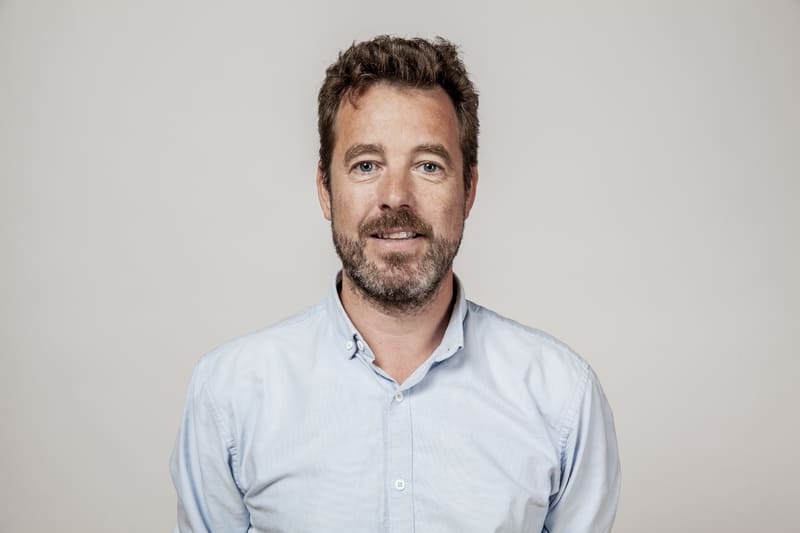
©Barcelona City Hall
How do you measure whether Barcelona has made progress in terms of becoming a smart city?
That’s not easy, because a city is a highly complex entity. We have to look at rent levels and quality of life as well as the entire area of mobility. It’s comparatively easy to measure our progress in the area of climate protection: We analyze emission values, the number of solar panels or charging stations, and collect data on how many people use public transportation. Here, we can use KPIs to see whether we have improved as a city. But ultimately, it remains a marathon: We are seeing progress, but in many cases it takes time for success to materialize.
What role does politics play in this – keyword: changing governments?
A big one. In a positive sense, politics is responsible for ensuring that smart city projects actually improve people’s lives. But the rhythm of politics does not always match the rhythm of transformation. Innovation often takes longer than an election cycle. We are therefore constantly faced with the problem of having to balance short-term projects with long-term strategies.
How do you handle data?
Each department in the city administration has its own dashboards for its specific topics. At the same time, there is a central, city-wide dashboard that monitors strategic development goals. Transparency and data accessibility are key components for us. It’s not just about intelligently managing all activities, but also about building and maintaining trust among citizens.
What are the biggest challenges right now?
First and foremost: climate change and all its consequences. Heat waves, air quality, mobility, energy, housing construction – it’s all connected. Every area of city life is affected by global warming. That’s why climate protection is the overarching issue for us.
What have you learned in this process?
That cooperation is indispensable and, at the same time, difficult. Universities, research, companies, administration – they all speak their own language. They all have their own interests, and their cultures also differ considerably in some cases. You have to be willing to compromise and find common ground. Cooperation is not a sure-fire success, but it is the only way to solve complex problems.
How big is your team?
The core team at BIT Habitat consists of around ten people. We work with external partners and other departments, but we are responsible for coordinating the various smart city projects.
Who are your most important partners?
Universities, research institutions, and large companies with their own innovation departments. And, of course, important local players such as car manufacturer SEAT and major trade fairs such as Fira, with whom we regularly carry out pilot projects.
Keyword “Barcelona Innova”: What is behind this initiative?
This is our new innovation platform. It was launched at the beginning of this year. We want to use the “sandbox” method. Companies,
start-ups, and institutions can test pilot projects under real-world conditions. They receive support from the city if they wish. Our job is to open the doors to the relevant departments, promote dialogue with the administration, and obtain the necessary permits. The important thing is that we are open to everyone. Anyone can contribute their ideas, regardless of their industry or size. This creates a true innovation ecosystem.
Top-down and bottom-up: How do you approach citizen participation in concrete terms?
We work in both directions. Sometimes, as a city, we set priorities and determine for ourselves which issues need to be addressed, such as water consumption or energy conservation. Then we say, “This is the problem, bring us solutions.” That’s the top-down approach. At the same time, there is also a bottom-up channel: citizens, companies, or institutions propose solutions themselves, which we support financially and organizationally. The key to both approaches is that no one is excluded.
What will be the focus for the next five to ten years?
Quite clearly: climate change and the creation of affordable housing. These issues are so complex that they will remain on the agenda in every legislative period, regardless of political majorities. We deliberately avoid a rigid smart city strategy, instead using innovation as a method. We want to be able to respond flexibly to the challenges we currently face.
How would you sum up Barcelona’s definition of a smart city?
For us, smart city means collective intelligence. Technology is a tool, but not the goal. Ultimately, it’s about making everyday life more pleasant for citizens: less air pollution, more affordable housing, functioning mobility. Smart city means cooperation and ensuring that the city remains livable for everyone.